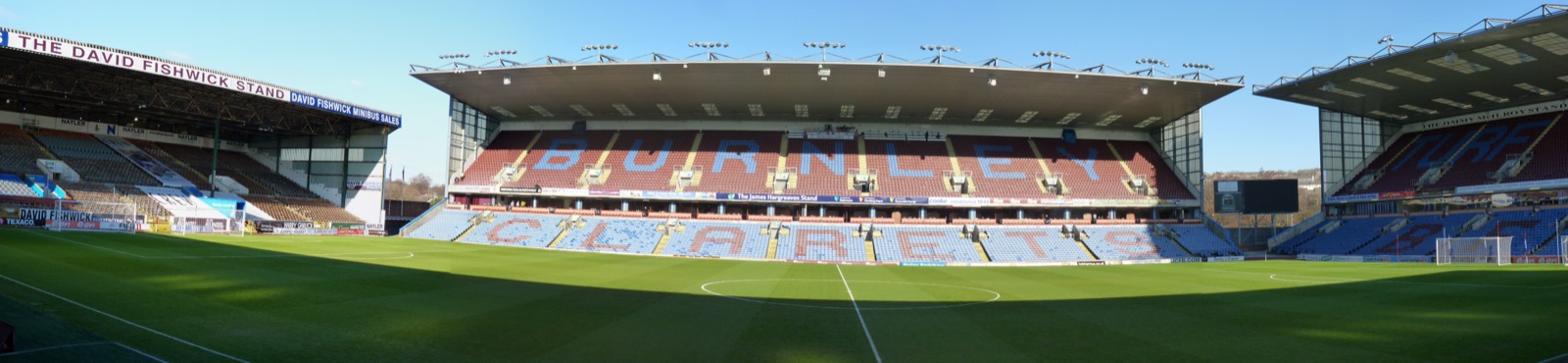
The window in the big European leagues shut between 31 August and 1 September, and clubs have kept announcing signings ever since. On 4 September Liverpool confirmed an agreement for an eighteen year old forward from Saint Etienne. On 6 September Burnley announced Jamie Vardy. In between, half of Serie A registered free agents.
It is not an exception and it is not a favour: these are three different routes, each with its own conditions, and they are worth keeping apart because they do different things.
First door: the free agent
The best known and the most misunderstood. The transfer window governs transfers, that is a player moving from one club to another. A player without a contract belongs to no one: when he signs, he is not transferred, he is employed.
One condition decides, and it concerns timing: the previous contract must have ended, or been terminated, before the window closed. Anyone who becomes free after the deadline does not qualify.
This is the door Burnley used on 6 September for Vardy, free after Cremonese went down, on a one season deal. It is the same one several Serie A registrations have gone through in these days, with one warning: the detail changes from federation to federation, and in Italy the matter is governed by an official communication of the FIGC that sets conditions of its own. The general rule is shared, the way it is applied is not.
Second door: the deferred registration
The least known, and the one that explains the announcements that look impossible.
A club can sign today a contract that takes effect from the next window. What it cannot do is register the player now, that is put him on its list and field him. The two things are almost always described with the same word, and they are different.
The clearest case of these days belongs to Liverpool, and there are two of them:
| Player | Announcement | Where he plays in 2026/27 | When he is registered |
|---|---|---|---|
| Lucca Brughmans, goalkeeper, 18 | 1 September 2026 | Genk | Sources diverge: a loan from Liverpool per the statement, an agreement effective 1 July 2027 per an encyclopaedic entry |
| Djylian N’Guessan, winger, 18 | 4 September 2026 | Brest, on loan | When the winter window opens |
In the second case the announcement came three days after the window closed, and that detail makes the mechanism visible: had it been a registration, that date would have been impossible. Being an agreement, it was not.
One thing the statements do not say and that carries weight: before the loan, Saint Etienne had extended the player’s contract to 2028. That is not paperwork. A club selling a player in the final year of his deal loses bargaining power; extending before selling is how you avoid selling at the price the calendar sets.
Third door: windows still open elsewhere, and it works for selling
The calendar of registration periods is not the same everywhere: when Europe closes, several leagues stay open. For a European club that means one thing, and it should be put precisely: you can sell, not buy. Selling into a league that is still open is an outgoing transfer, and the window that counts is the one of the buying club.
Here, though, we stop, and we explain why. On the closing dates the sources we consulted do not agree. A table updated to 1 September 2026, which states that it follows the official FIFA transfer window calendar, gives Saudi Arabia as open until 12 October. A piece published in May, citing the Saudi federation, gave the closure as 6 September, that is today. The two cannot both hold, and we have not opened the federation’s own calendar.
We are not picking the date that makes the article neater: we write that they diverge, and anyone who needs the figure for a decision should take it from their own federation’s calendar, which is the only place where that date is a fact and not a summary.
What none of the three doors allows
Everything else said, the real rule is simple: a club cannot take and field today a player who was under contract with another club on 1 September. There is no fourth route, no form to fill in, no emergency exception.
The three doors above work because they do not do that: the first concerns someone already free, the second moves the effect to January, the third applies to a buyer in another regulatory time zone.
What to watch between now and January
Two things, and the second is the more interesting.
The first: how many quality free agents find a club. In September the list is long, and every year someone lands at a team that is losing.
The second: how many announcements arrive with a deferred registration. It is a mechanism that rewards clubs planning across two windows instead of one, and it effectively moves into September and October part of the work everyone describes as finishing on 1 September at eight in the evening.
Sources: Burnley FC statement of 6 September 2026 for Jamie Vardy; Liverpool FC statements of 1 September 2026 for Lucca Brughmans and of 4 September 2026 for Djylian N’Guessan, with the loan terms and the effective date as carried by English and French outlets the same day; Saint Etienne confirmation of 3 September 2026 on the loan to Brest and the extension to 2028. On the windows still open the two sources cited diverge and both are reported: neither date has been verified on the calendar of the competent federation, and for that reason neither is presented as certain.
Frequently asked questions
If the window is closed, how can Burnley register Vardy?
Because the window governs transfers between clubs, and a free agent moves from nowhere. One condition applies: his previous contract must have expired or been terminated before the window shut.
Liverpool announced a signing on 4 September. How is that possible?
Because they announced an agreement, not a registration. Djylian N'Guessan becomes a Liverpool player when the winter window opens, and in the meantime he plays on loan at Brest. Signing now a contract that takes effect from the next window is allowed.
What is the difference between signing and registering?
Signing is an act between the parties. Registering is entering the player on a club's list, which can only be done inside a registration period. Almost every deal announced in these days depends on that distinction.
Which windows are still open in these days?
Sources do not agree, and we say so rather than pick the convenient one. A table updated to 1 September, which states it follows the official FIFA transfer window calendar, gives Saudi Arabia until 12 October; a piece published in May, citing the Saudi federation, gave 6 September. The two dates cannot both be right and we have read neither on the federation's own calendar.
What use is an open window elsewhere to a European club?
Selling, not buying. An Italian or English club can sell a player to a league whose window is still open, but it cannot register an incoming player for itself until January.
What cannot be done in any way?
Taking and fielding today a player who was under contract with another club on 1 September. That is exactly what the window exists to prevent, and it has no side entrances.
Does a contract renewal fall under these rules?
No. A renewal is an agreement between a club and a player who already belongs to it, and it can be signed on any day of the year. That is why the days after the deadline are full of extension announcements.